Multi-Sensor Core Logger (MSCL-S)

Standard Multi-Sensor Core Logger (MSCL-S)

Multi-Sensor Capability

Geotek’s standard Multi-Sensor Core Logger (MSCL-S) is recognised as a crucial step in many geological coring workflows, including those for palaeoclimate, mineral exploration, geometallurgy, oil and gas, nuclear or geotechnical. The MSCL-S operates by automatically moving core samples past a series of sensors. The MSCL-S benefits from a modular configuration allowing for a range of petrophysical and geochemical sensor technology to be integrated onto one core scanning system, producing a single depth co-registered data set. 

The MSCL-S may accept either whole/split unconsolidated sediment cores in liners, or whole/slabbed rock cores with or without a liner. Depending on the requirements of the project, each MSCL-S system can be setup to take depth co-registered measurements for each sensor between 1 mm and 100 mm intervals downcore with a position accuracy of better than 0.1 mm. Furthermore, if new technology becomes available, or research focus changes, the MSCL-S system can be upgraded with new sensors to ensure longevity of the scanning system.

The MSCL-S is field-proven with Geotek and many of our customers routinely installing their core scanner in remote onshore locations, or offshore laboratories aboard ships or platforms. Geotek can also provide containerised laboratory solutions for customers.

Set up for a variety of core types

The MSCL-S accepts nearly any form of core material, including whole or split rock core samples and whole or split unconsolidated sediment samples in plastic or metal liners. The system is capable of logging core sections of up to 1.55 m with a maximum diameter of 150 mm.

  • Whole Lined Sediment Core

    • Data acquired through plastic or metal-lined cores

  • Split or Slabbed Cores

    • Accepts split sediment cores or slabbed rock cores

  • Whole Unlined Rock Core

    • Samples are pushed through the system on stabilising core trays for continuous logging

Unlock the full value of your core material

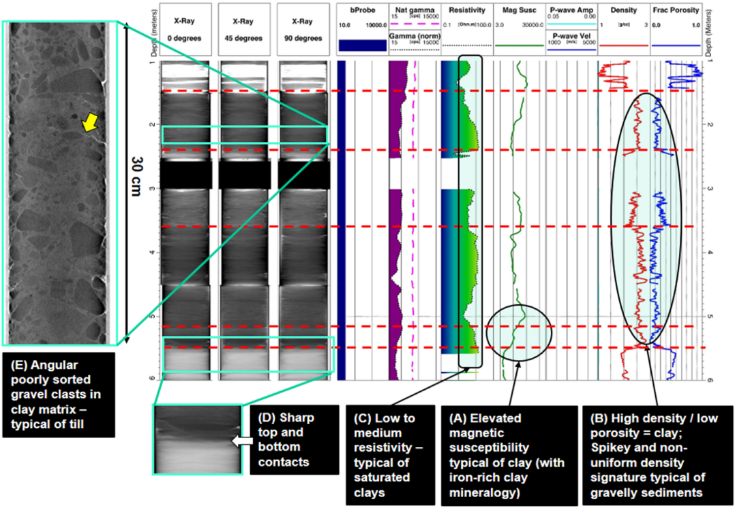
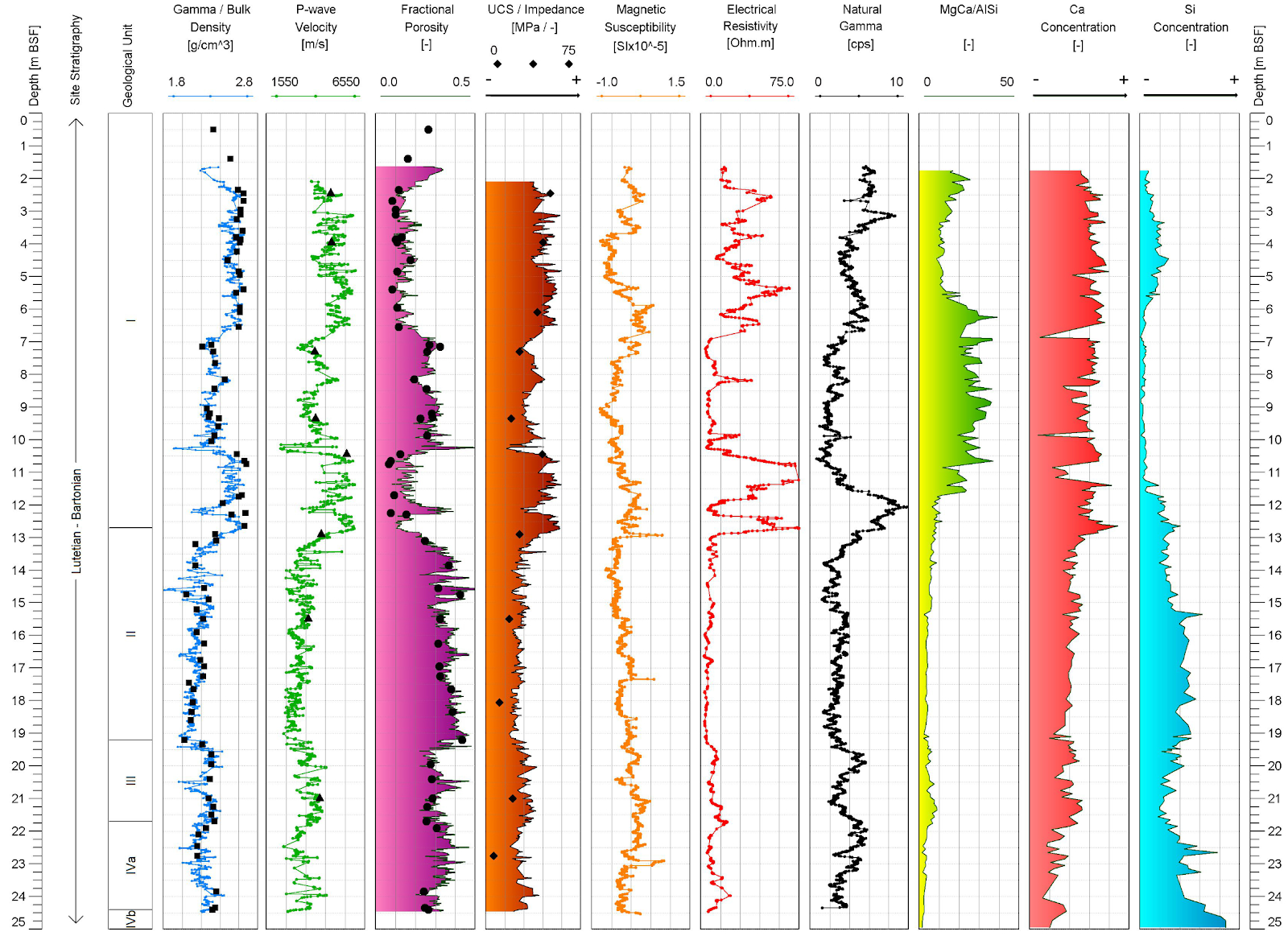
The simultaneous and depth co-registered acquisition of multi-sensor data provides the perfect foundation for the analysis of geological stratigraphy, and to uncover parametric relationships that define different geological units that might have previously been hidden or unidentified.

Whilst each individual dataset is equally valuable, the real advantage of acquiring multiple parameters is the ability to correlate between disparate data sets and deliver integrated vertical downcore profiles to aid in the identification of core lithology, heterogeneity, and facilitate analytical data comparisons of materials between core locations or between core and downhole data. 

Importantly, MSCL-S data acquisition is entirely non-destructive and creates a permanent digital archive for future reference, permitting the investigation of archived core material or core material that is scheduled for future destructive testing.

Applications

previous arrow
Core repositories
Core Repositories

Archived core material is an enormous reservoir of potentially valuable data which is often underutilised. Archived cores can be digitised using MSCL-S technology.

In this example we showcase MSCL-S data acquired from core originally drilled in 1985 from the Dunlin Field in the UKCS. The MSCL data firstly correlated with the existing sedimentological logs but also identified new, previously undescribed facies. This example highlights how much data can be rescued from archived core, which can then be used, confidently, to bolster new datasets and ultimately understand the reservoir or geological stratigraphy in enhanced detail without the requirement to acquire new core material.

PlayPause
next arrow
  • Specifications

    • Core accepted: Length: up to 155 cm; Diameter: up to 15 cm
    • Compatible sensors: gamma density, P-wave velocity (Vp), shear wave velocity (Vs), electrical resistivity, magnetic susceptibility (loop and point sensors), natural gamma spectroscopy, line-scan imaging, colour spectrophotometry, X-ray fluorescence, infrared spectroscopy
    • Core motion: Fully automated motion. Linear precision: 0.01 mm
    • Data output: Tab-delimited ASCII files containing all measured parameters vs. depth in section and core
    • Track dimensions: Length: 5 m; Depth: 1.2 m; Height: 1.15 m (1.9 m with camera); Weight: c. 500kg
    • Electronics rack dimensions: Length: 0.55 m; Depth: 0.6 m; Height: 0.6 m; Weight: 65 kg
    • Scan speed: Typical logging speed 4 m/hr
    • Data collected from all sensors simultaneously, displaying co-registered data sets in real time.

Other Configurations

The MSCL-S is a core scanning tool to which creates a systematic and semi-automated workflow to extract the maximum amount of data using multiple sensors in a time-efficient and cost-efficient operation. As Geotek’s sensor technology expanded, a range of different platforms were developed to accommodate a variety of scanning projects and customer requirements. These include systems that may be dedicated to petrophysical property scanning, geochemical/spectroscopic property scanning, core imaging, hyperspectral IR imaging, scanning of core boxes, or analysis through x-ray imaging. 

Please see below for a range of different sensor configurations installed onto our systems.

For further information please contact us.